
Finding Harford County Residents
Harford County keeps no single roster of its residents. Instead, each record system captures a person in one role. The Maryland assessment card is the strongest first stop for a parcel. Maryland Land Records then traces the recorded ownership trail. Case Search at the Maryland Judiciary can surface a public case-index entry. The state voter form checks one registration at a time. It is not a street-wide list. For older names and addresses, the Harford County Public Library, the Harford History Center, the State Archives, and local newspaper collections offer dated leads that no current-record portal can match.
Write the spelling, date, and jurisdiction down first. A Harford mailing place can differ from the town, the ZIP, or the parcel municipality. Treat an initial hit as a lead only. That distinction matters. A second source should agree on the person, place, and period before you rely on it. Assessment owners, deed parties, directory subscribers, and registered voters are distinct roles, and none of them proves a complete current household on its own.
- For a known address, search SDAT by Harford County and street or address. Save the parcel account, premises and mailing fields, legal description, and deed reference.
- Open the County WebGIS parcel layer to compare the parcel with its centerline, subdivision, municipal boundary, ZIP polygon, and adjacent features.
- Use the deed book and page as a lead in Maryland Land Records. Read the instrument before calling a recorded party a resident.
- For a name-first question, narrow the voter or court search with the required identifying fields and note the record date and limits.
- For a past household or an unavailable public file, use the library, Historical Society, Archives, clerk counter, or a focused Maryland Public Information Act request.
Note: A no-hit can stem from a spelling slip, a coverage gap, a confidentiality rule, or an access boundary rather than proof that no record exists.
Harford County Resident Offices
Harford County keeps its records with the office that owns the subject. It does not use a single directory desk. Real property assessment data sits with SDAT. Recorded instruments and plats belong to the Circuit Court Land Records Department. Registration questions and confidentiality procedures go through the Board of Elections. Access routes differ from office to office. When no ordinary resident lookup or street directory index covers a record, the county public information channel can reach a defined administrative record. It cannot override a statutory exemption or a court-access rule.
Harford Land Records
20 West Courtland Street
Bel Air, MD 21014
410-638-3474
SDAT Harford County
2 South Bond Street, Suite 400
Bel Air, MD 21014
410-836-4800
Harford Board of Elections
133 Industry Lane
Forest Hill, MD 21050
410-638-3565
SDAT operates from the District Court Multi-Service Center, 8:00 AM to 4:30 PM. The Land Records counter welcomes visitors Monday through Friday, 8:30 AM to 4:30 PM, except State holidays. If the online portal is ever down, the clerk can still confirm book, page, copy, and plat procedures.
Harford SDAT Resident Paths
The Maryland SDAT Real Property Data Search works by address. Pick Harford County first. Then choose a mode. Options include address, street, account or PAN, map reference, sales, or another property option. The official guide is clear. It does not search by owner name, town, neighborhood, subdivision, or ZIP code directory terms. For a whole road, leave the street number out. Drop the direction and suffix when needed. Type the street name carefully. Add a trailing wildcard only for an incomplete name.
| SDAT field | Use in a Harford search | Reading the result |
|---|---|---|
| County | Select Harford County, code 13. | Sets the assessment jurisdiction. |
| Street number and name | Use an exact address or omit the number to widen a street search. | Returns assessment records, not a household census. |
| Account or PAN | Use the parcel identifier, including for deleted accounts. | Joins the card to map and deed research. |
| Map reference | Enter district, map, and parcel fields. | Helps keep similarly named parcels distinct. |
A parcel card in the Harford County residents directory carries real weight. One record can list the assessed owner, a mailing address, a premises address, a principal-residence flag, the legal description, map and grid, parcel number, subdivision, plat, and deed reference. Keep those labels distinct when you take notes. The mailing address often differs from the property address. An assessment entry is not a title report. Nor does it prove who actually lives at the premises.
Harford WebGIS Resident Context
The Harford County Maps & Apps page offers a free WebGIS Data Viewer. You can query, mark up, view, and print a custom map from it. Related REST services layer in cadastral parcels, building footprints, subdivision boundaries, centerlines, and ZIP polygons. The same services add municipal lines, zoning, historic resources, election geography, and planning data. The parcel identifier is the best bridge from SDAT into the map. Just remember the limits. A map label is not a deed. It will not name everyone at an address.
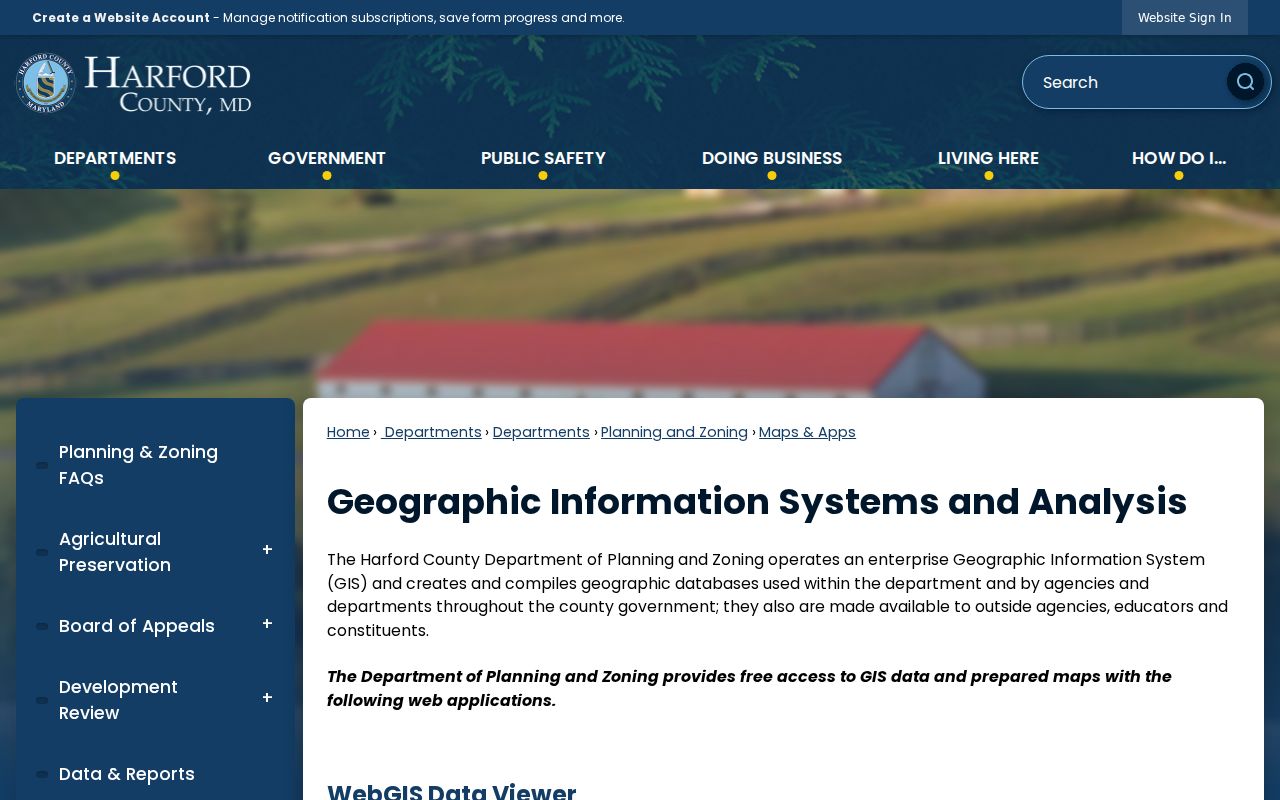
The viewer earns its keep as a context check. Before trusting a mailing label as a location fact, compare the parcel against the street centerline, the subdivision boundary, the ZIP polygon, and the municipal line. The GIS office sits at 220 South Main Street in Bel Air. It lists weekday hours of 8:00 AM to 5:00 PM. Those details help with local routing before a visit.
Harford Deed Index Changes
SDAT frequently hands you a book and page lead. The recorded instrument itself lives in Maryland Land Records. That portal was replaced on November 17, 2025. The new system requires a fresh account plus email-based two-factor authentication. You pick your county from the upper-left menu. Documented search fields cover clerk, book, page, and last or corporation name. They also cover legal capacity, ownership, party type, instrument type, remarks, and cross-reference book.
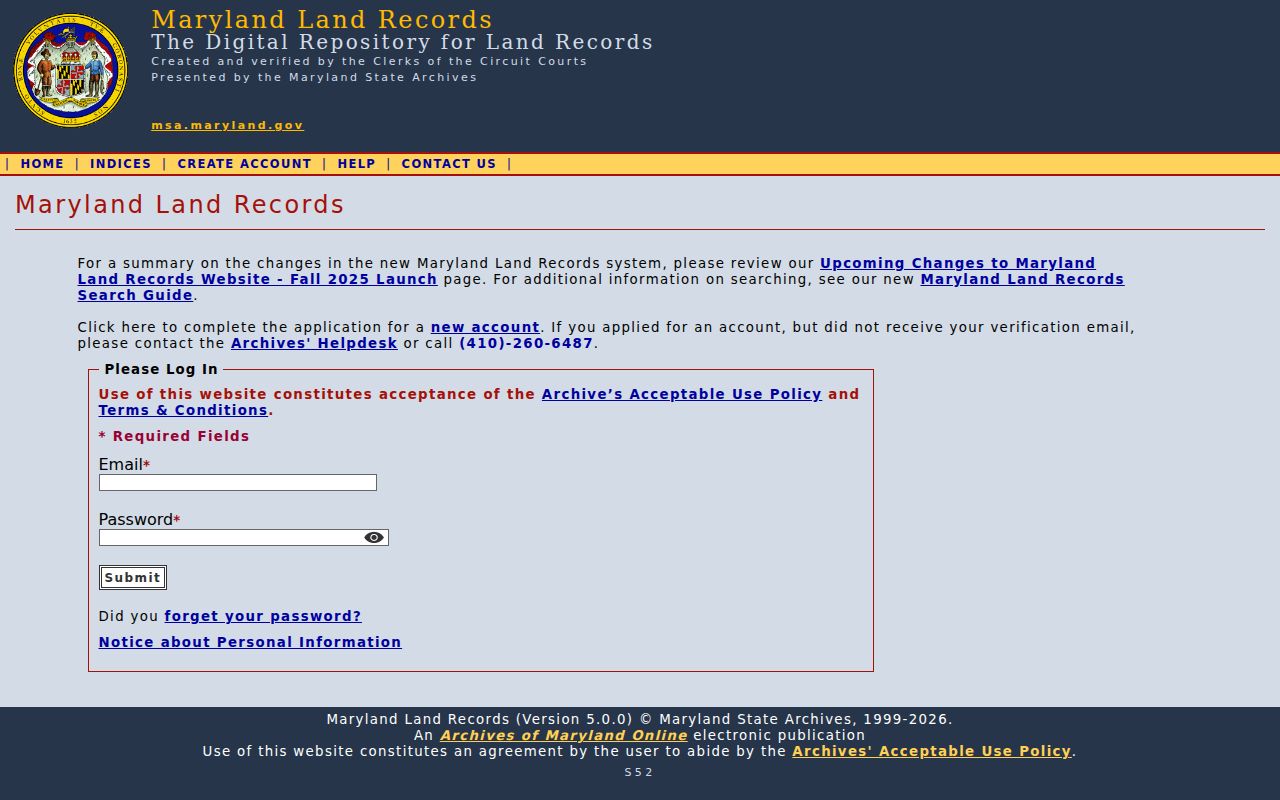
Book and page numbers are the fastest route to a single deed record. Read the instrument itself before chasing any earlier reference it cites. Grantor and grantee name the roles on a recorded instrument. Those roles are not always owners. They can be lenders, fiduciaries, representatives, or entities tied to the transaction. A login prompt, a missing scan, or a coverage gap can block the portal. The Harford clerk counter still works then. Mail requests and the county's defined records-request channels do too.
Current Harford County Directories
No single roster makes up a current Harford County residents directory. It is built from separate public roles instead. The assessment card serves as a current property record for a parcel. A voter registration confirms one individual. That confirmation holds only when the required fields match. The deed index lists parties to each instrument, while court results show a case-index role. Each source gives solid information when its limits are stated right beside it.
| Harford source | Record role | Custodian | Access route |
|---|---|---|---|
| SDAT property card | Assessed owner and parcel details | Maryland SDAT | Free address, street, PAN, or map search |
| Voter registration search | Individual registration match | Maryland State Board / local board | Name, date of birth, ZIP, and optional matching fields |
| Land-record index | Grantor, grantee, and instrument parties | Harford Circuit Court / State Archives portal | Account portal, clerk counter, and Archives series |
| CaseSearch | Public case-index party | Maryland Judiciary | Name or advanced search; clerk file for complete public record |
| Community materials | Public participants and local history leads | County, library, or Historical Society | Agendas, collections, appointments, or focused requests |
Address questions work best through the property and map route first. Then cross-check any record role with a name-index source. A name-only court result can stay broad. But the voter tool demands an individual match rather than a street. For one person, the Harford resident lookup route keeps evidence separate from assumption.
- Roll
- A list or data set maintained for a defined official purpose, such as assessment or voter registration.
- Index
- A finding tool that points to a record. It can omit or abbreviate information held in the underlying file.
- Parcel
- A defined piece of land used in assessment and map systems, commonly linked through an account or PAN.
- Criss-cross directory
- A historical address-to-name style directory. No complete countywide Harford shelf catalog was located in the research.
Harford Court Resident Checks
Maryland Judiciary Case Search supports case-number, party-name, and advanced routes. Advanced search narrows a party by court system, case type, and a filing-date range. It can also narrow by Harford County. The name route requires a last name. First and middle names stay optional, and documented partial-search conventions apply. The Judiciary FAQ sets Harford civil coverage from May 4, 1998. It sets criminal coverage from June 21, 1999. Results cap at 500 entries.
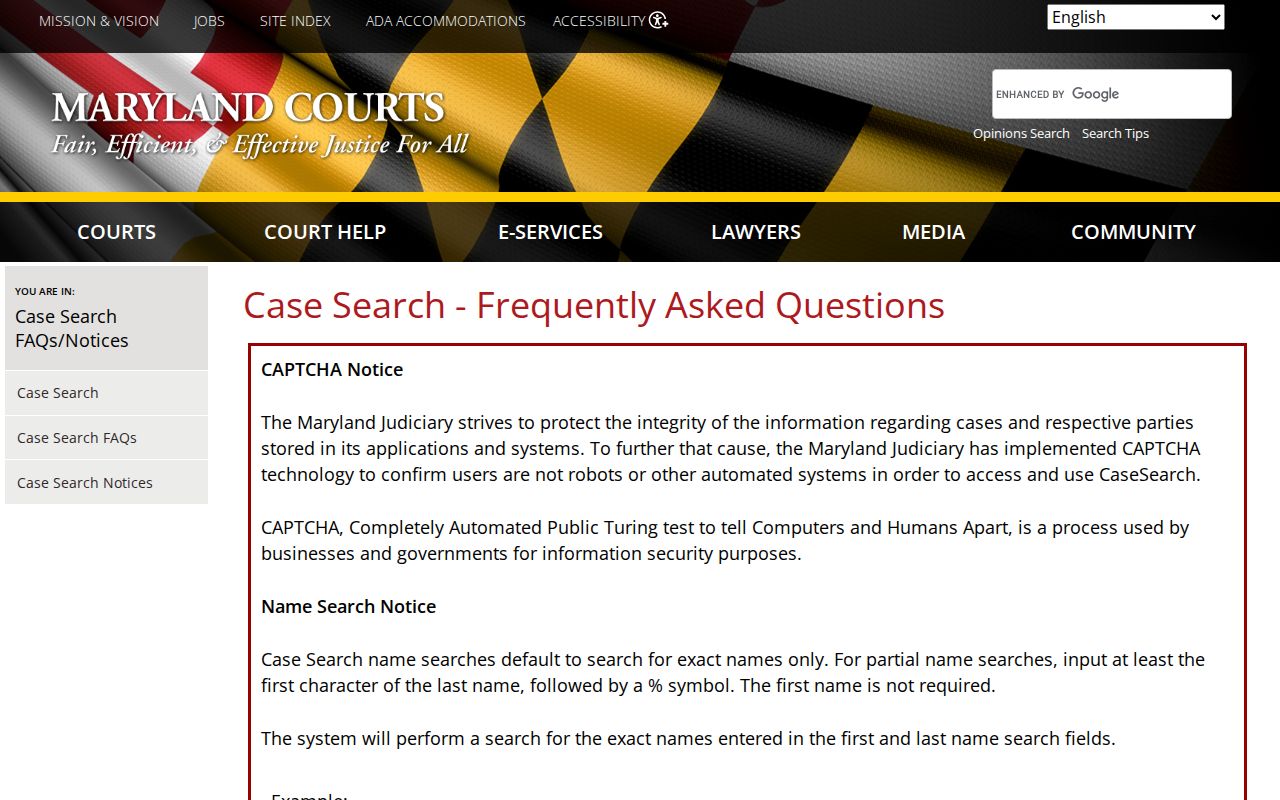
A result lists a case number, indexed name, party type, court, case type, status, filing date, and caption. The detail screen can add more. Parties, attorneys, schedules, judgments, service, and document references may all appear. Some cases never surface. Confidential, sealed, shielded, expunged, juvenile, adoption, and other protected matters stay out of ordinary public results. The clerk is the route for the complete public file.
Harford Voter Lookup Boundaries
The Maryland Voter Registration Search asks for first name, last name, date of birth, and five-digit ZIP. Street number and middle initial can sharpen the match. Updates run daily. A submitted change may take time to appear. After a recent move, try a former ZIP or contact the Harford Board of Elections. The tool returns one individual's registration and election information, not a street browse or a neighbor list.
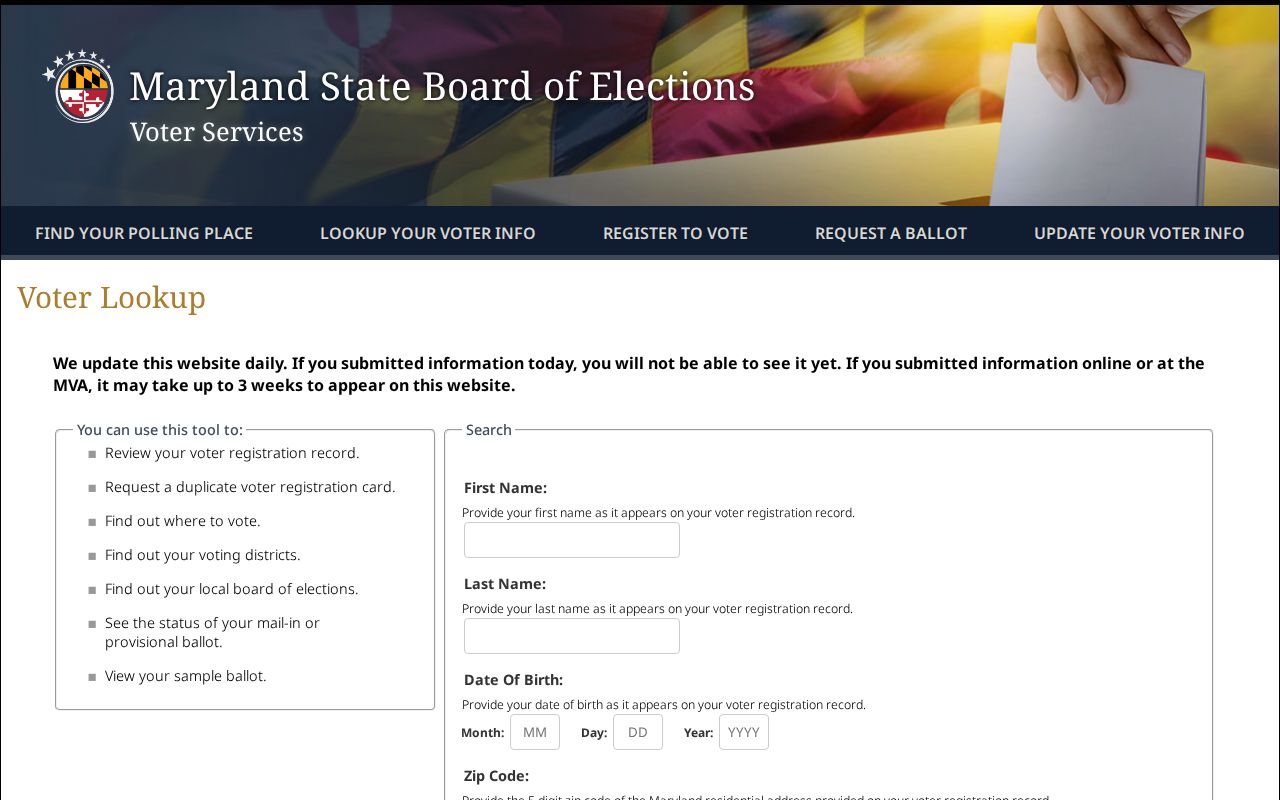
Maryland keeps most registration information open to public inspection while shielding specified confidential details. The State Board's list-request process requires an electoral-purpose certification. It will not yield a casual address list. Qualifying people get protected contact information through the State Board confidentiality form and the Safe at Home process.
Harford Vital Record Proof
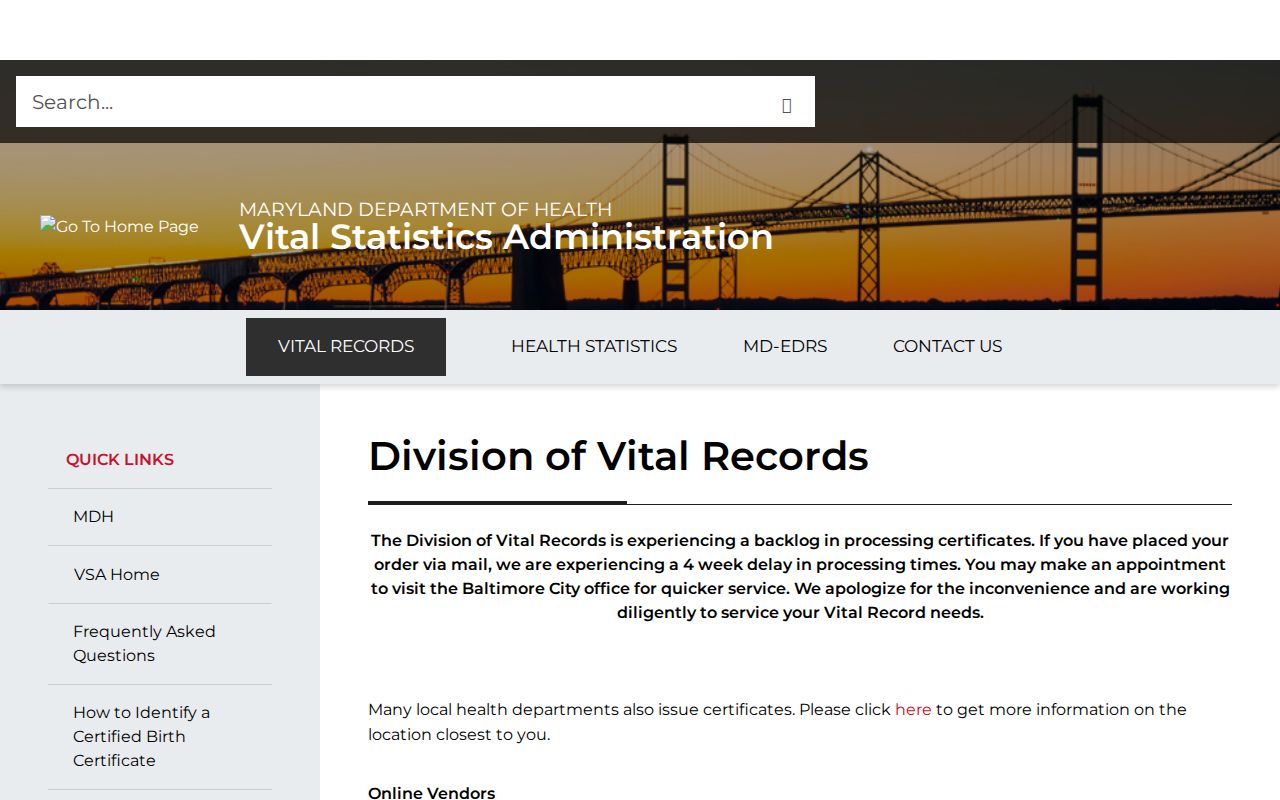
Vital records can confirm a historical or family relationship. They are not a general name directory. Under Maryland General Statutes §9-1015, birth records stay restricted for 100 years and death records for 10. The Maryland Division of Vital Records posts the current certificate routes: appointment, mail, an eligible local-health channel, and an official online vendor. Older birth and death material shifts to the Archives path. That transfer follows the Archives' own rules.
For a Harford marriage, the Circuit Court Licensing Department sits at 24 Office Street in Bel Air. Certified local copies move through five channels. In-person, mail, email, fax, and phone requests all work. Eligibility, identification, payment, and archive transfer dates still apply, so follow an index hit through the responsible custodian when certified proof is needed.
Harford Public Records Requests
Start with the custodian. A written request should name the record type, address or subject, date range, and format. The Harford County Council PIA route accepts email at PIARequest@HarfordCountyCouncil.com. Mail also works. Send it to 212 South Bond Street, 2nd Floor, Bel Air, MD 21014. Maryland's PIA starts in General Provisions Title 4. Section 4-601 is part of that title. The law expects a targeted request rather than a broad demand for every record tied to one person.
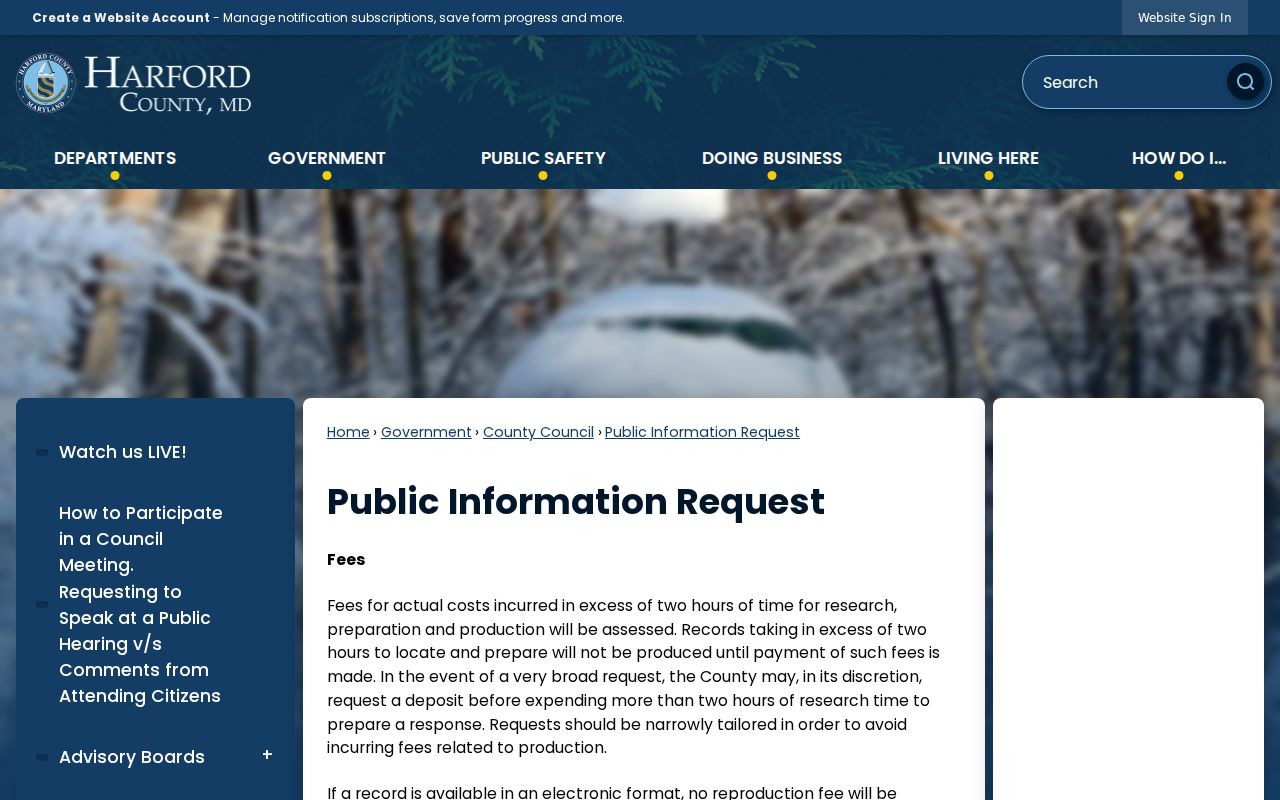
Harford County Council charges no fee for electronic transmission. The first two hours of locating and preparing records cost nothing. Actual costs can follow after that. Listed rates run $0.30 for a black-and-white page. A color page costs $1. A thumb drive runs $5. A broad request may require a deposit or return a fee estimate.
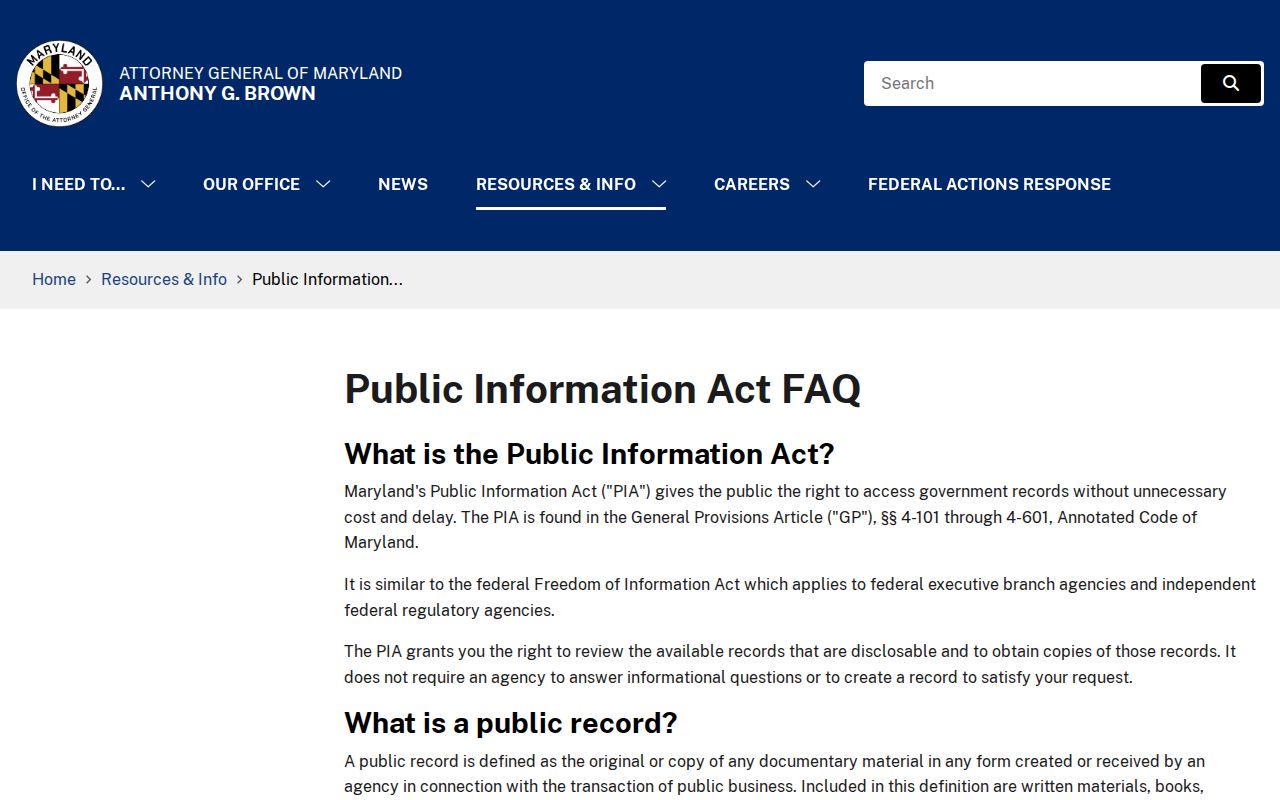
The Maryland Attorney General's PIA FAQ explains that agencies generally respond within 30 days. A denial should carry a written legal basis. Ask for electronic delivery and a current record schedule whenever an online archive looks incomplete.
The request process is a fallback, nothing more. It cannot open a sealed court matter, a restricted vital certificate, a protected voter contact field, or any other mandatory exemption. Keep your paperwork. Hold the request, response date, fee estimate, and any withholding explanation.
Historical Harford County Directories
Old Harford County resident directories read best as dated snapshots, each one a single moment. The Library of Congress holds Maryland White and Yellow Pages for Harford County. They cover September 1960 through September 1962. That digitized run spans 600 images with a locality index. The Harford History Center inventory mentions a Harford District 1910 directory and a telephone book. The Maryland State Archives points to Polk Maryland gazetteer and business-directory series. The run covers 1909 through 1917. Verify the local pages first. Assign a town only after that check.
Maryland State Archives research guidance is one route for record-series questions and digitized material. The HCPL Maryland Room and the History Center add local history and surname leads. They also add map, cemetery, court-book, and newspaper leads. A printed address proves only the edition date. So weigh it against other evidence. A deed, tax valuation, or obituary carries its own date. The full collection trail sits on the Harford city directory collections page.
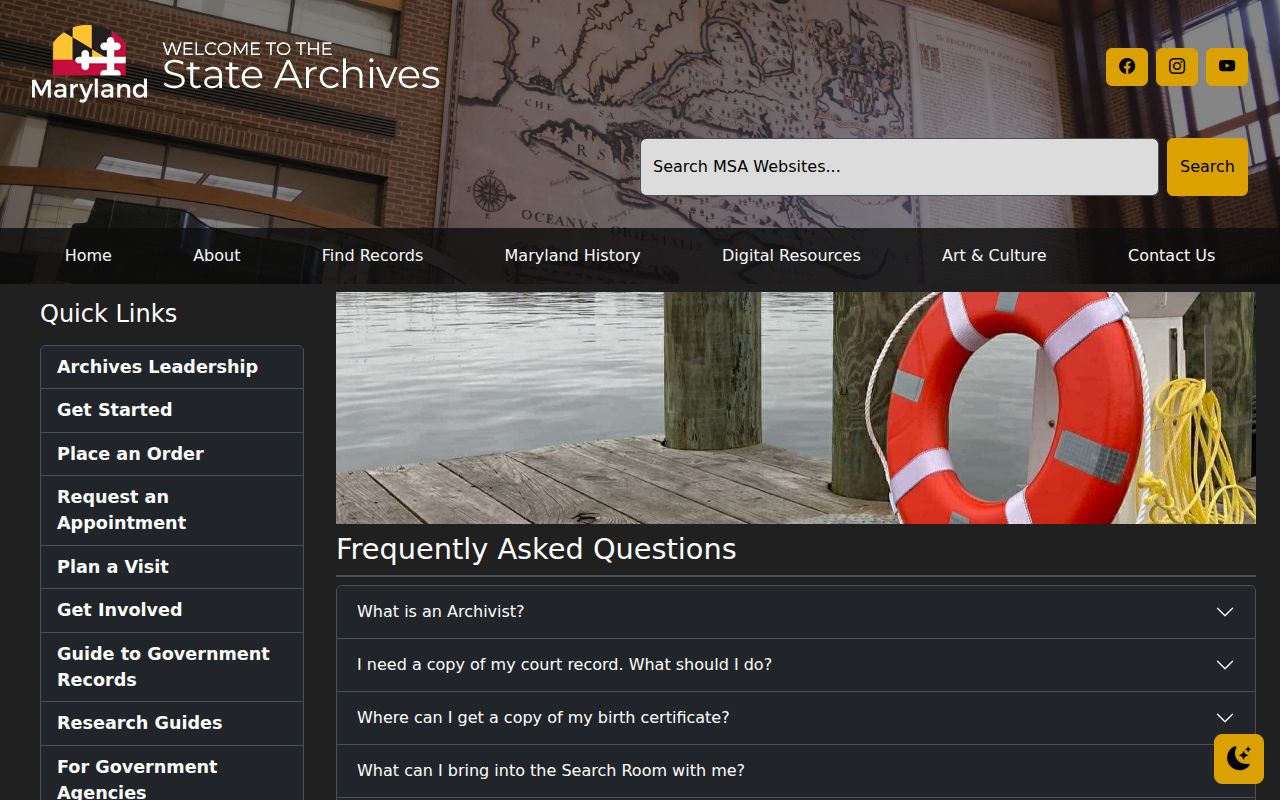
The Archives guide also lists Harford land, court, marriage, probate, tax, survey, and index series. That range matters. A digitized directory can fall silent. A modern portal may not reach the year you need, and the Archives series step in there.
Harford Courthouse Records Story
Harford County dates to 1773. Its first court session met inside a store in March 1774. Belle Aire, later Bel Air, took the county seat role in 1782. Planners laid the town around courthouse, jail, and sheriff functions. A first courthouse rose in 1791. Fire destroyed that building in 1859, and the courthouse standing today carries that same year. So a name or property trail near downtown can scatter across later deeds, newspaper files, Archives series, Historical Society court books, and municipal records. It rarely sits in one place.
Treat the fire as a prompt to triangulate, not proof a record vanished. An original that burned may survive as an index entry, a later copy, a docket reference, a legal notice, or a land book line filed elsewhere. Three fallback sources make that hunt practical: the State Archives county guide, the Aegis & Intelligencer newspaper run spanning 1864 to 1923, and the Historical Society collections. Together they catch what the courthouse copies missed.
Harford Evidence Trail
Keep a small log for each Harford County residents directory search. Record the name spelling you used and the address or locality. Note the date and the portal or office. Add any filters and the record's role. Record the result reference and the source's stated limit. That discipline keeps a parcel owner from being mistaken for an occupant. It also stops a directory entry from hardening into a current profile. And when a portal changes, the log makes corrections far easier.
The county's 2025 records-retention notice described an earlier finding. Schedules were not current and needed filing with the Maryland State Archives. When a department file proves hard to locate, ask which office holds it now and what schedule governs it. The new Land Records account system, shifting GIS metadata, and changing library access rules teach one lesson. Capture access dates and keep the official source behind each fact.
Note: Record roles and access limits are part of any result, so preserve them with every citation.