
Harford County Records for One Person
No single resident roll covers the whole county. A Harford County search instead moves through records with different jobs. A parcel card names an assessed owner. CaseSearch points to a public court-index entry. The voter tool checks one registration when its required fields line up. Start with the record that fits the fact you hold. Then test the match against a second, independent source.
| Record | What It Confirms | Where | Access |
|---|---|---|---|
| Assessment card | Assessed owner, premises and mailing roles, PAN, and deed lead | Maryland SDAT | Address, street, account, map, or sales search |
| Registration match | One voter record and related election information when fields match | Maryland Voter Registration Search | Individual lookup only |
| Court index | Public case number, party role, type, status, and filing date | Maryland Judiciary Case Search | Online index; clerk file for complete record |
| Vital or marriage record | Eligible certified proof or a historical family lead | Division of Vital Records and the Harford clerk | Eligibility and age rules apply |
| Recorded instrument | Grantor, grantee, instrument, book, page, and recording trail | Maryland Land Records | Portal account or clerk-copy route |
| Professional or entity listing | Public status or filing information tied to a professional or entity | State registry or Judiciary listing | Not a private-home record |
For an address, SDAT is the natural first stop. Note the assessed owner, mailing address, premises address, and deed reference. These are separate fields. One limit matters. SDAT does not search by owner name, town, subdivision, or ZIP. Starting from a person instead, the voter portal or CaseSearch may fit first. A professional, business, or attorney entry can separate similar names. Still, an office or entity address is not proof of a private residence.
Harford County CaseSearch for One Name
A bare name can pull too many results. Use Advanced Search when that happens. Maryland Judiciary Case Search offers a Person or Business party choice, optional first and middle names, and a required last name. Narrow the field with Court System and case type. Add a County filter set to Harford. You can also set a filing-date range or exact date. Check the official FAQ for coverage. Harford civil cases date to May 4, 1998, and criminal cases to June 21, 1999. Those dates mark online index coverage, not the earliest files the court holds.
| CaseSearch control | Use in a focused search | Format or limit |
|---|---|---|
| Party type | Choose Person or Business before reading a result | Current advanced-search choice |
| Name fields | Enter first or middle name when known; keep last name exact | First and middle optional; last required for name route |
| Court System | Limit to Circuit, District, Appellate, or all courts | Useful for common names |
| Case type and County | Select the relevant type and Harford County | County is a dropdown filter |
| Filing date | Use From/To or Exact Date | MM/DD/YYYY |
| Search and Reset | Run a filtered query or clear the controls | Results can be capped at 500 |
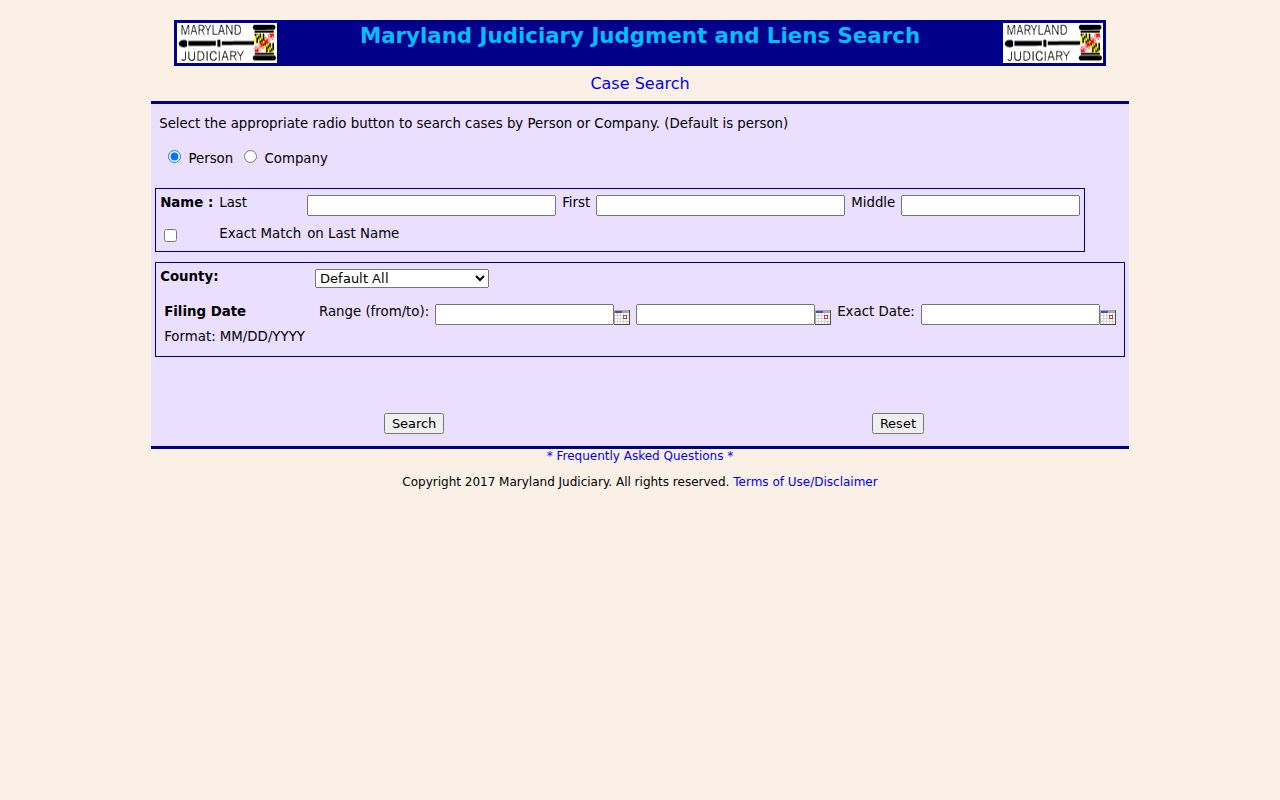
The official Maryland judgment-search screen displays a separate person-or-company route with name, county, and date controls. The name field is only part of it. Record the court, county, and date filters you used too.
A sample CaseSearch row shows what one result holds. Columns can include case number, indexed name, party type, and court. Case type, status, filing date, and caption may also appear. Month and year of birth show in some rows. Details add more. Parties, attorneys, scheduling, judgments, service, and document references may all appear. Sort and narrow before comparing those fields to another record.
Why a Harford County Name Hit Is Not Proof
A match is a lead, not a finding. The same name can belong to a different person. It can mark a former address too. Before calling anything a match, weigh a court, a date, a public identifier, a parcel role, or a permitted vital-record clue against an independent record. A directory, voter, parcel, or court hit proves nothing about identity on its own.
The limit cuts both ways. Sealed, shielded, expunged, juvenile, and adoption matters sit outside public access. An online no-hit is not proof that no file exists. Report the real search boundary, such as a date range or county filter. Never turn an incomplete index into a conclusion.
Harford County Voter Lookup Requires a Full Match
The state voter search checks one registration. It will not generate a county roster. First name, last name, date of birth, and a five-digit ZIP are all required. Street number and middle initial stay optional. The record updates daily, though submitted changes can take up to three weeks to appear. Use the name exactly as registered. A former ZIP sometimes works better after a move. For a legitimate match needing local guidance, contact the Harford County Board of Elections.
With the right identifiers, the portal can display registration, polling information, districts, the local board, ballot status, and a sample ballot. It cannot prove physical presence on the day of a search. It is not a street browser either. Qualified electoral-process users have a separate list-application process, with its own certification, timing, and delivery rules. That process never substitutes for a single-person check.
Note: Preserve the search date and the exact spelling used, because an old name, a recent move, or an indexing difference can change a match.
Harford County Vital Records and Marriage Proof
Access rules decide who may pull a vital record. Maryland General Statutes §9-1015 keeps birth records closed for 100 years. Death records stay closed for 10. DVR routes older birth and death material to the Maryland State Archives. The Archives applies its own rules. A historical index match does not open a recent record.
Birth certificates follow set channels. DVR lists lobby appointments, mail, local health-department service where offered, and its official online vendor. The listed birth fee is $10. Death copies run through the same DVR channels with entitlement and identification requirements. Fees run $10 for the first copy. Each additional copy costs $12. DVR issues a Certificate of Record Search rather than refunding the usual fee when no record exists.
Harford marriages follow a separate local route. The Harford Circuit Court marriage office sits at 24 Office Street in Bel Air. Its page lists certified copies at $5.50. Requests may arrive in person or by mail, email, fax, or phone. The clerk handles Harford records, while DVR and Archives routes cover state and historical needs.
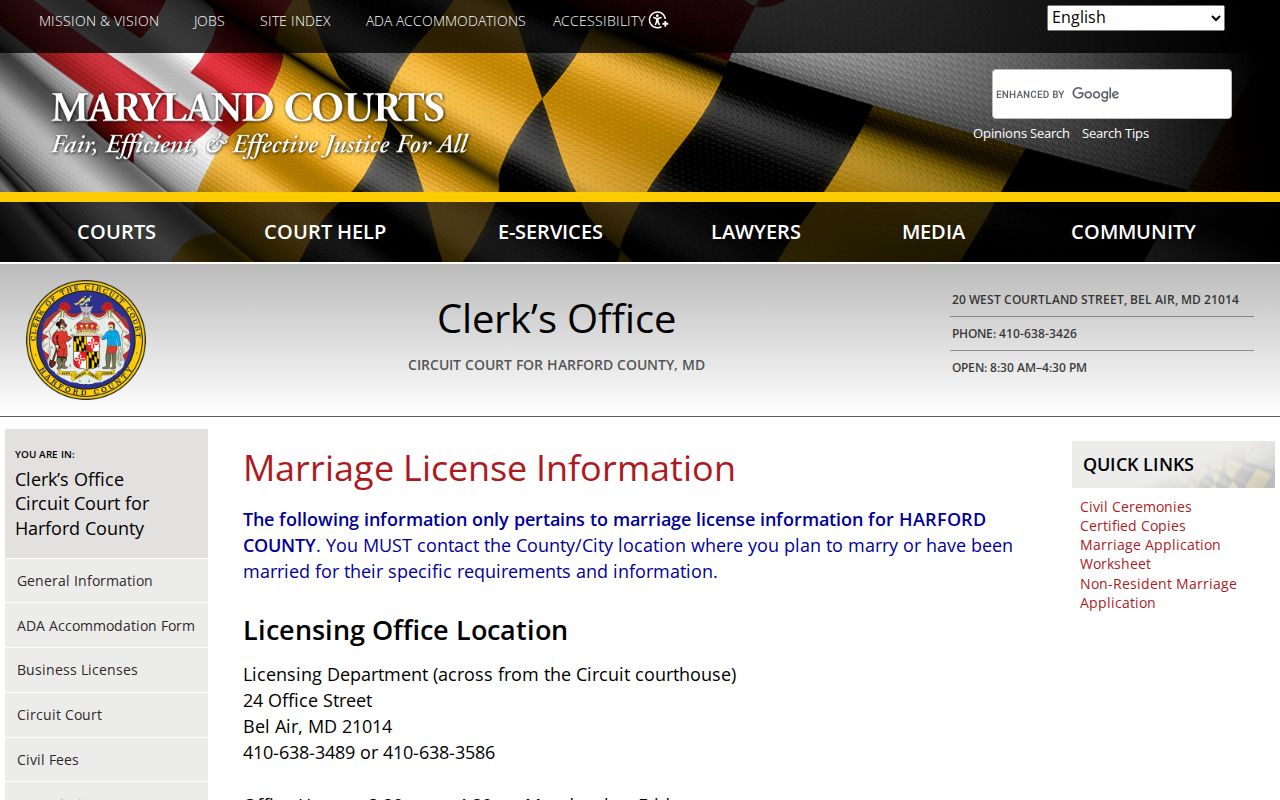
Harford marriages have a local fallback. Send the clerk the requested names and date. Include payment and a return address. Do not trust an index display alone.
The Maryland vital-record fee schedule separates certificate fees from online processing and expedited-shipping charges. Check the official page for current fees and eligibility. Do this before sending identification or payment.
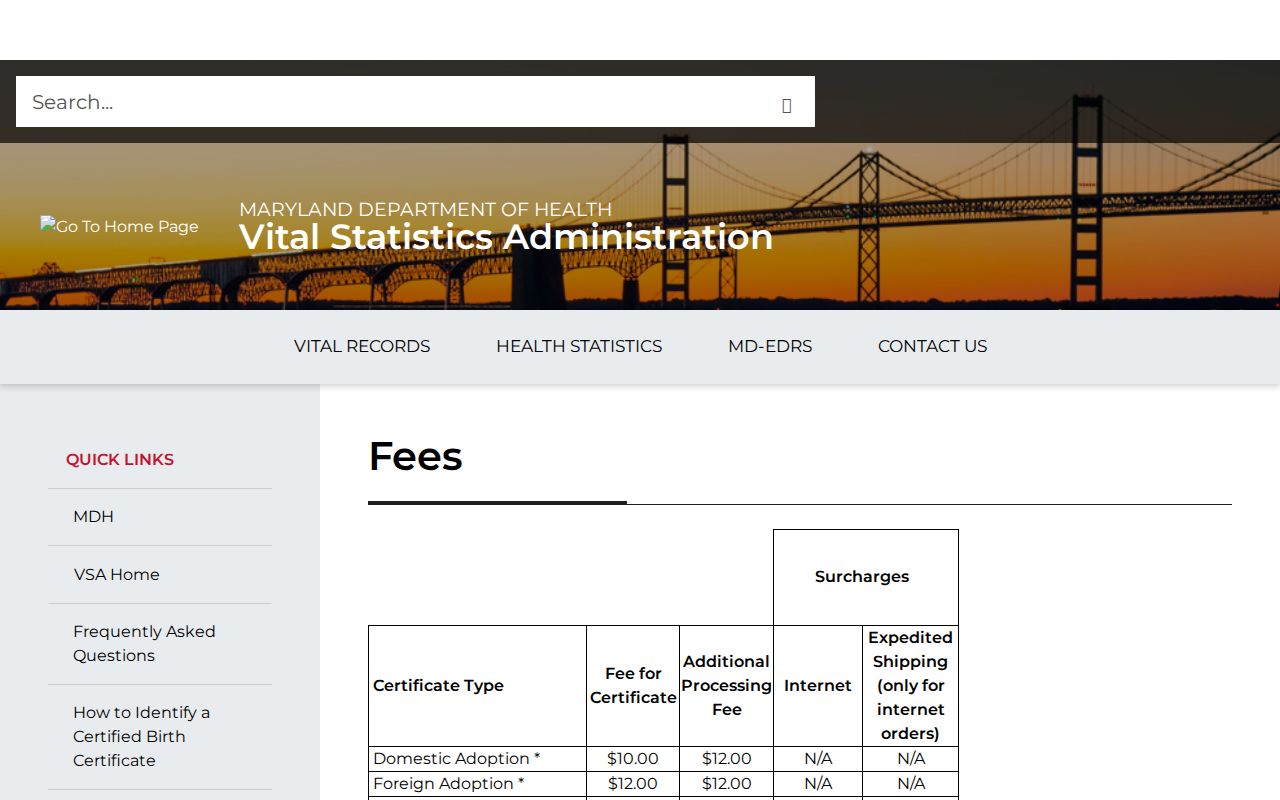
Fees help you pick a lawful channel. They never change who may request a recent certificate. Historical directories, obituaries, and Archives indexes stay leads until the right custodian confirms the record.
Professional and Entity Records in Harford County
Maryland keeps several professional and entity databases. The Business Express Entity Search accepts a business name, Department ID, or EIN. It can surface a filing, status, or resident agent. The state board verification entry point and the Judiciary attorney listing run separate status checks. Each serves a different record role. Cite them as entity or professional records, never as proof of a personal address.
Not every county filing sits behind a portal. Ask the custodian for the specific license, permit, entity paper, or meeting packet. A Maryland Public Information Act request should name the record, office, and date range. Also request electronic delivery and a fee estimate. The Act still honors protected personal data and any court, voter, or vital-record restriction.
Verify a Harford County Resident Record
Two independent matches beat one convenient result. A careful trail names each source's role: assessed owner, recorded party, voter registration match, court party, or historical family lead. A record that is too old, broad, or incomplete stays a lead. Stop there. Ask the keeper for the proper copy.
- Write the name variant, date, and jurisdiction first, and decide whether the starting clue is a person, parcel, or historical event.
- For an address, search SDAT, preserve the PAN, premises and mailing fields, legal description, assessment year, and deed reference, then use GIS or Land Records only for the role each source supports.
- Run a narrowed CaseSearch or voter search only with the required identifiers, and compare court, date, ZIP, or other public fields rather than the name alone.
- Use DVR, the Harford clerk, Archives, HCPL, or the History Center for the proper certified or historical follow-up. Record a restriction or no-hit exactly as encountered.
- Docket
- A court’s running case record, often showing events, filings, parties, and dates rather than every document in the file.
- Index versus image
- An index points to a record through searchable fields; an image is the scanned or paper document and can have separate access rules.
- Certified copy
- A custodian-issued copy that carries the office’s certification and is different from a search result or an informational scan.
Note: Maryland Land Records and SDAT can tie a parcel to a full deed trail. Owner, mailing address, premises address, and recorded party differ.
Harford County Clerk and Historical Records Fallbacks
When online access ends, go to the keeper. Complete court files await at the clerk counter or public kiosk at the Circuit Court, 20 West Courtland Street, Bel Air. Call ahead to confirm the file's location and copy procedure. Older names need different tools. The Maryland State Archives Harford guide, the HCPL Maryland Room, and the Harford History Center open historical paths. Court books, directories, obituaries, tax material, and local newspapers all sit along those paths.
The Maryland Land Records portal changed in November 2025. It now requires a new account with two-factor authentication. Keep the Harford Land Records counter, phone, mail, and email routes in your research note. A portal change is an access issue. It is never a reason to merge separate people or record roles.
Limits on Harford County Name Research
Maryland offers voter confidentiality procedures and Safe at Home for address protection. Court rules can withhold sealed, shielded, expunged, juvenile, adoption, guardianship, mental-health, and victim material. The adoption registry and confidential-intermediary route are controlled programs. They are not open family databases. If an index looks wrong, preserve the URL, date, spelling, and result. Then ask the source custodian for a correction.
Lawful use. Use this process for personal, lawful research and treat protected or uncertain information with care. Never use a result to stalk, harass, intimidate, or harm another person.
A Public Information Act request can seek a defined public record from its custodian. It cannot defeat a mandatory confidentiality rule. Protection has its own channels. State Board voter confidentiality forms, court procedure, DVR eligibility, and Safe at Home are the right routes when protection, not disclosure, is at issue.